
Process
Plant utilities — steam, air, nitrogen and cooling water
Why the steam header pressures are what they are, what a steam trap actually does and how it fails, why instrument air and plant air must never share a header, and the reason nitrogen kills more people on plants than almost anything else.
Standards referencedISO 8573-1ASME B31.1API 2015
Nothing on the utilities list makes product. Everything on it stops the plant when it fails — which is why utilities failures cause more unplanned shutdowns than process problems do.
Steam: why there are several headers
Steam carries heat, and it delivers that heat by condensing. The temperature at which it condenses is fixed by its pressure, and that single fact explains the whole distribution system.
A reboiler needing 180 °C cannot be served by steam that condenses at 110 °C, and using 40 bar steam to heat a tank to 60 °C wastes most of the energy it took to make it. So a plant runs high, medium and low pressure headers, letting steam down in stages and taking useful work out of the drop wherever a turbine driver can be justified.
Superheat is steam heated above its condensing temperature. It matters because it prevents condensation forming in the pipe during distribution, and because a turbine fed with wet steam erodes its blades.
Condensate, and the traps that return it
Condensate is hot, clean, treated water. Throwing it away means paying to treat and heat fresh water in its place, so it is collected and returned to the boiler.
Between each steam user and that return line sits a steam trap — a valve whose only job is to pass water and hold back steam.
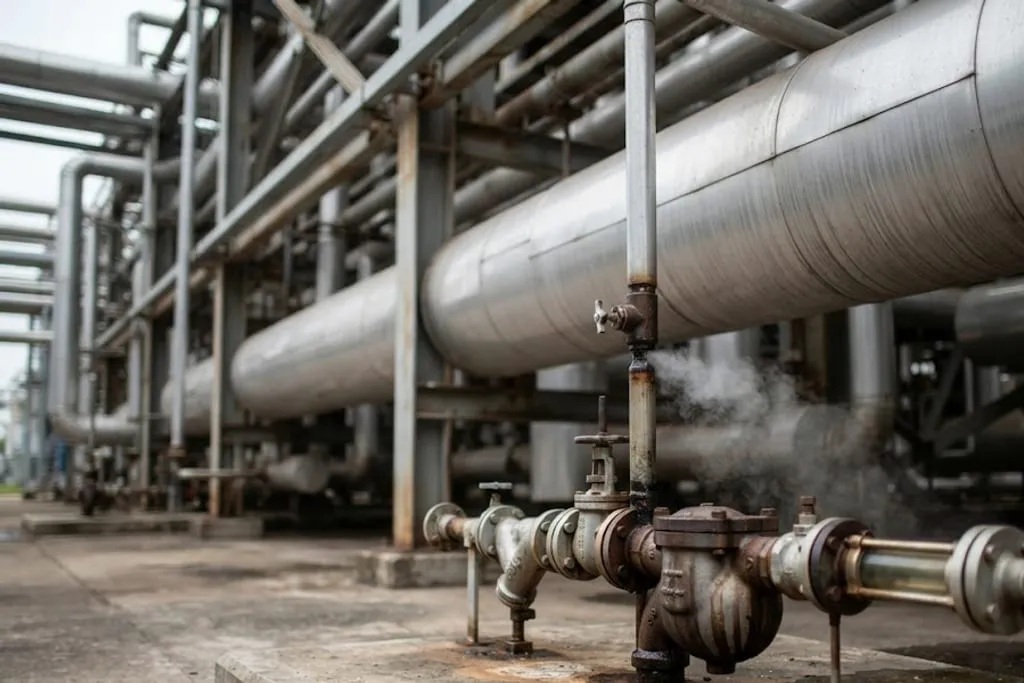
Water hammer is the other condensate problem. A slug of water accelerated along a steam line by the flow arrives at a bend or a closed valve with enormous force, and it has split pipework and killed people. It is prevented by draining lines properly before admitting steam, warming them slowly, and sloping them so condensate runs to a trap rather than collecting in a low point.
Instrument air and plant air
Compressed air does two quite different jobs, and mixing them is a classic error.
Instrument air drives control valve actuators, positioners and pneumatic instruments. It is specified for dryness — a dewpoint well below the coldest ambient the line will see — and for freedom from oil and particulate.
Plant air runs tools, hoses, blowing and cleaning. It needs none of that.
Loss of instrument air is a plant-wide event. Every spring-return valve goes to its fail position simultaneously — which is why the fail position of each one is a process safety decision, and why instrument air receivers are sized to give operators time to shut down in an orderly way.
Nitrogen: the utility that kills
Nitrogen purges oxygen out of vessels and lines so that hydrocarbon and air never meet. It blankets tanks, it dries out equipment, it pressure-tests systems.
Cooling water
Most plants reject heat to a circulating water system cooled in a cooling tower, and the cooling comes from evaporating a fraction of the flow. That is what allows a tower to cool water below ambient air temperature, and it has three consequences.
Water is consumed continuously — evaporated, plus drift carried off as droplets, plus blowdown.
Dissolved solids concentrate. The water leaves as vapour; everything dissolved in it stays behind. Left alone, the concentration climbs until salts deposit as scale on the hottest surfaces, which are the exchanger tubes you least want fouled. Blowdown removes part of the circulating water and fresh makeup dilutes what remains.
It is a biological system. Warm, aerated, nutrient-rich water grows things — algae, slime, and the bacteria responsible for Legionnaires’ disease. Treatment is continuous, and the health risk is real enough that drift eliminators and dosing regimes are regulated in many countries.
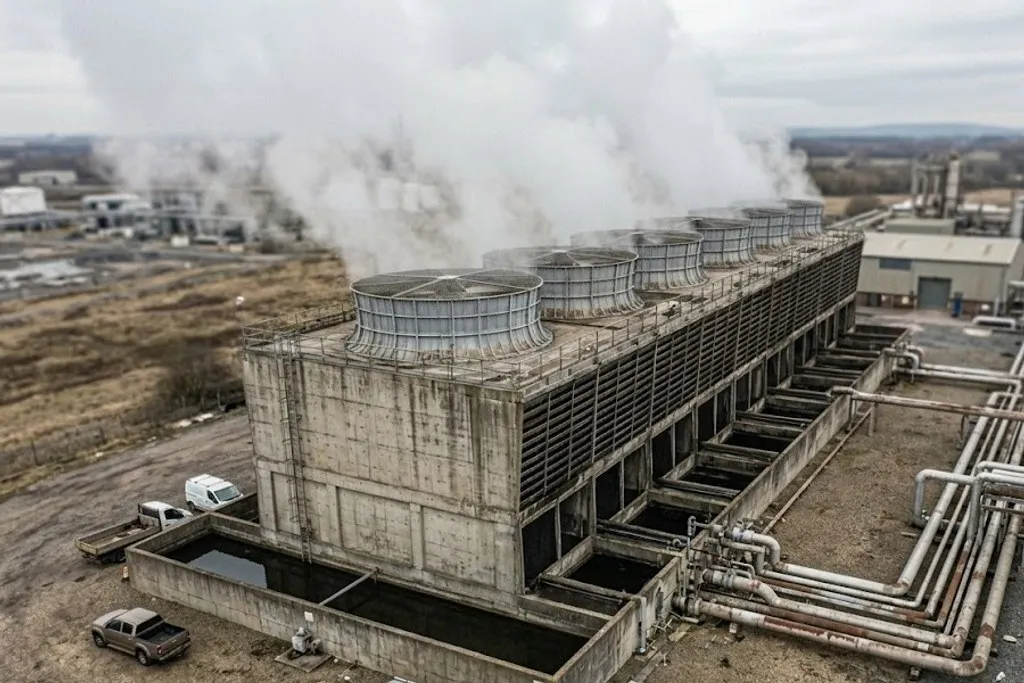
A fouled exchanger is very often a cooling water problem rather than a process one, which is worth remembering before anyone opens the bundle.
The other utilities
Fuel gas fires heaters and boilers, and is usually taken from the plant’s own production, which means its composition varies with what the plant is doing.
Flare and blowdown is a utility in the sense that everything relies on it — see relief and flare systems.
Potable and service water, drainage and effluent — covered in water and effluent.
What to take away
- Steam pressure sets condensing temperature, which is why a plant runs several headers rather than one.
- Let down through a turbine rather than a valve where the flow justifies it, and the shaft work is effectively free.
- Steam traps fail both ways. Open wastes steam invisibly; shut floods the user and looks like fouling.
- Instrument air is separate from plant air on both quality and availability, and losing it is a plant-wide event.
- Nitrogen gives no warning whatever. It is the commonest cause of multiple-fatality confined space incidents.
- Cooling towers cool by evaporating, which consumes water, concentrates solids and grows biology.
- A fouled exchanger is often a cooling water problem, not a process one.
Check your understanding
7 questions. Nothing is recorded — this is just for you.