
HSE
Fire prevention and protection — removing the fire triangle, then planning for failure
Why prevention beats protection every time, what passive fire protection actually buys you, why a deluge system is about cooling the vessel next door, and the gas detection layout decisions that determine whether anyone finds out in time.
Standards referencedNFPA 15NFPA 30API 2030IEC 60079-10-1
A process plant holds large quantities of fuel under pressure, often hot, next to air. Fire protection is the set of arrangements for when that combination finally finds an ignition source — but almost everything worth doing happens before that point.
Prevention first, and it is not close
The fire triangle needs fuel, oxygen and ignition. On a hydrocarbon plant the oxygen is unavoidable and the fuel is the product, so prevention comes down to two things: keep the fuel inside the pipe, and keep ignition sources away from where it might not be.
Ignition control is why hazardous area classification exists, why hot work needs a permit, and why static is taken seriously during tank filling and drumming.
Gas detection: the warning that arrives before the fire
A gas alarm and a fire alarm mean entirely different things, and confusing them wastes the only useful warning a plant gets.
Where detectors go matters more than how many there are.
- Heavier than air — propane, butane, most condensate vapour. It sinks, pools in pits, trenches and bunds, and flows downhill. Detectors go low.
- Lighter than air — methane, hydrogen. It rises. Detectors go high, and under any roof or canopy that will trap it.
- Toxic detection is separate. H2S is dangerous at concentrations far below anything flammable, so a flammable gas detector reading zero says nothing about whether the atmosphere will kill you. See occupational health.
Point detectors sample the air where they sit. Open path detectors shoot a beam across a distance and see anything crossing it, which suits a perimeter or a line of equipment. The two answer different questions and most plants use both.
Passive fire protection: buying time
Steel does not burn. It softens — and a structural member carrying load will eventually fold.
Fireproofing is insulation applied to steel so the metal takes far longer to reach that temperature. Concrete encasement, intumescent coating that swells into a char when heated, or a sprayed cementitious layer.
What gets fireproofed is decided by what would make things worse if it failed: structural steel supporting equipment, vessel skirts, pipe rack legs in the fire zone, and the actuators of valves that have to work during a fire.
Active systems
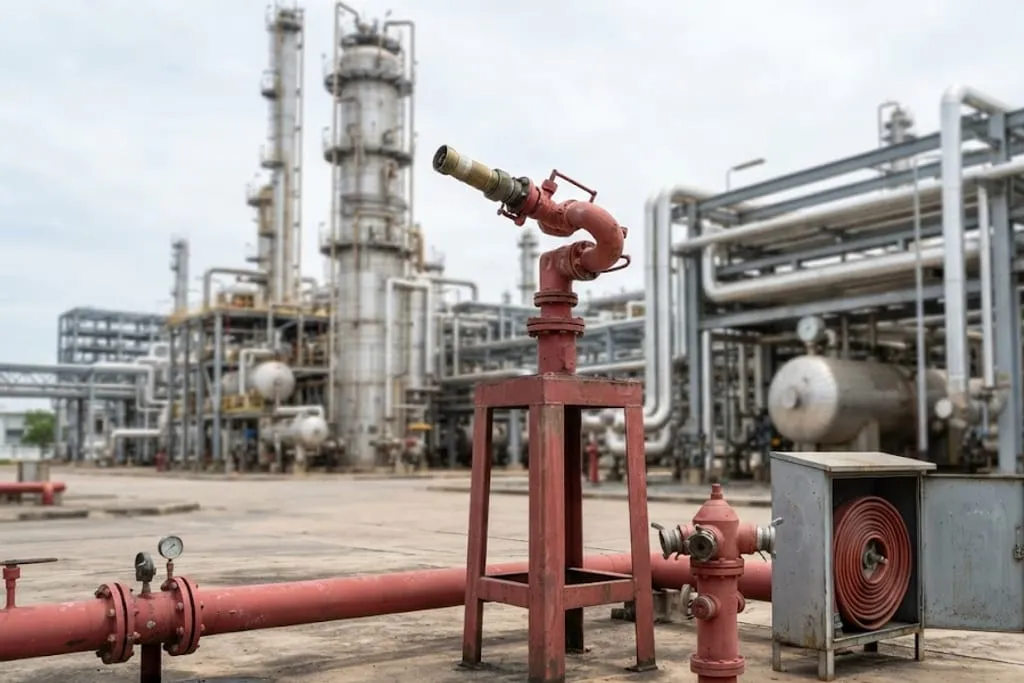
Firewater is delivered through a ring main — a loop rather than a branched tree. The reason is simple: during a fire, part of the system may be damaged or need isolating, and a ring keeps every hydrant fed from both directions.
Deluge floods an area with water through open heads. On a vessel that is not itself burning, its purpose is cooling the metal so the vessel does not lose strength and rupture while being heated from outside. That failure mode — a pressurised vessel weakened by an adjacent fire — is among the worst outcomes on a plant, and deluge on exposed equipment is aimed squarely at preventing it.
Foam is for liquid pool fires, especially tank farms. It blankets the surface and cuts off the oxygen, and it must be compatible with the product — alcohols and polar solvents break ordinary foam and need an alcohol-resistant type.
Gaseous systems protect enclosed spaces full of electronics, such as control rooms and switch rooms, where water would destroy what it was protecting. They work by starving the fire of oxygen or interrupting the reaction, which is precisely why the discharge alarm and the evacuation delay exist.
Emergency response
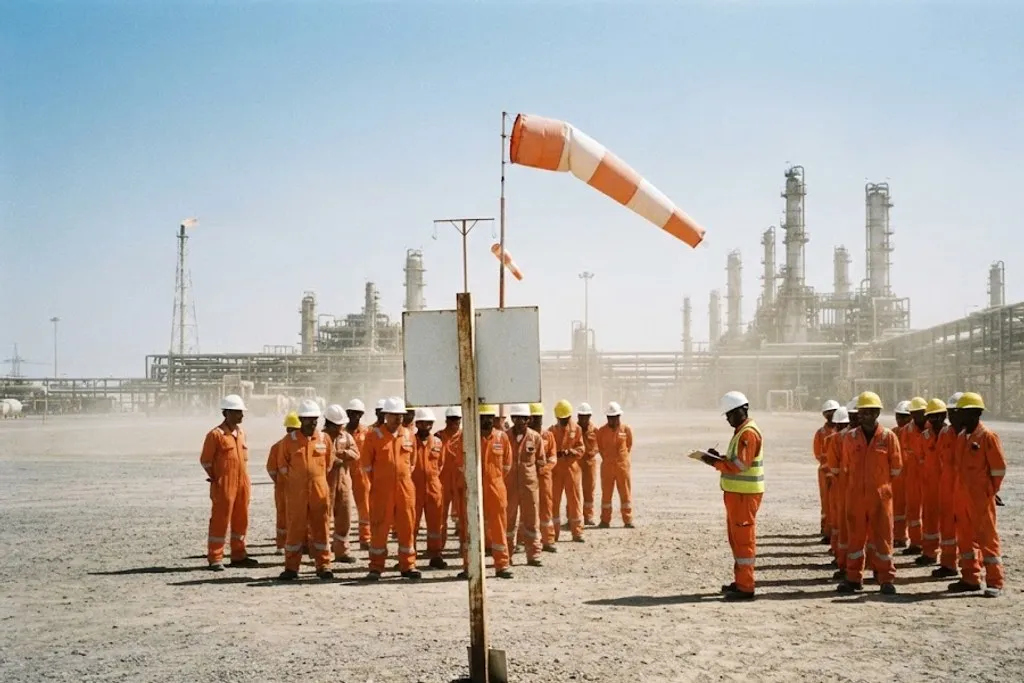
Detection and suppression only matter if people act on them correctly, which takes us to emergency response and welfare — muster, headcount, and the wind direction that decides which muster point is the right one.
What to take away
- Prevention outweighs protection. Everything active on this page operates after containment has already failed.
- A gas alarm means it has not ignited yet and the event is still preventable. A fire alarm means it is not.
- Detector placement follows density — low for heavier-than-air, high for lighter. Flammable detection says nothing about toxicity.
- Fireproofing buys time, rated in hours. Damaged fireproofing has lost its rating locally and hides corrosion behind it.
- Deluge on an exposed vessel is cooling the metal, not fighting the fire.
- Firewater rings keep every outlet fed from two directions; pumps are proved under flow, not by starting.
- Foam must match the product — polar solvents break ordinary foam.
Check your understanding
7 questions. Nothing is recorded — this is just for you.