Mechanical
Material degradation — sensitisation, hardness limits and galvanic attack
Why welding can ruin the corrosion resistance of stainless steel without touching the weld, what the three conditions for galvanic corrosion are and which one to break, why sour service controls hardness rather than strength, what carbon equivalent predicts, and why zinc and stainless are kept apart.
Standards referencedAPI 571NACE MR0175ISO 15156API 941
The risk-based inspection topic makes the case that naming the damage mechanism is the whole job, because the mechanism decides the technique.
This is the other half of that: what makes a particular material vulnerable to a particular mechanism. Almost every row below is a property of the metal meeting a property of the service. Neither causes damage alone, which is why the same steel is entirely sound in one line and failing in the next.
| Sensitisation / weld decay | Austenitic stainless with normal carbon content | Time in the 450–850 °C range — usually from welding | Low-carbon L grades, or stabilised grades with titanium or niobium | Damage appears in a band beside the weld, not in the weld |
|---|---|---|---|---|
| Chloride stress corrosion cracking | Austenitic stainless steel | Chlorides, tensile stress and temperature above about 60 °C | Duplex or higher-nickel alloys; keep chlorides off the surface | Insulation chlorides and seawater are the usual sources |
| Sulphide stress cracking (sour service) | Hard steel and hard weld heat-affected zones | Wet H2S | Hardness limits — NACE MR0175; B7M in place of B7 bolting | Hardness is the controlled variable, so PWHT and welding control matter |
| Hydrogen induced cracking (HIC) | Steel with elongated inclusions from rolling | Wet H2S | HIC-tested plate with controlled sulphur and inclusion shape | Different from SSC — driven by cleanliness rather than hardness |
| High temperature hydrogen attack | Carbon and low-alloy steel | Hydrogen partial pressure at temperature | Chromium-molybdenum alloys chosen against the Nelson curves | Damage is internal; wall thickness stays exactly as it was |
| Galvanic corrosion | The less noble of two joined metals | Electrical contact plus a continuous electrolyte | Break one of the three conditions — usually the electrolyte or the contact | Small anode with large cathode is the dangerous area ratio |
| Liquid metal embrittlement | Austenitic stainless steel | Molten zinc — from galvanised material during a fire or welding | Keep zinc-bearing material away from stainless | Why galvanised bolts and stainless are separated during fabrication |
| Temper embrittlement | Cr-Mo steels with tramp elements | Long exposure around 350–575 °C | Controlled chemistry (J-factor, X-bar) at procurement | Shows as loss of toughness on cooling, not as thinning |
| 885 °F / sigma phase embrittlement | Ferritic and duplex stainless; high-chromium alloys | Prolonged time at 400–500 °C or 600–900 °C respectively | Material selection against the service temperature | Both make a tough alloy brittle without changing its appearance |
| Erosion-corrosion | Most alloys, but especially soft ones | High velocity, turbulence, entrained solids or droplets | Lower velocity, better geometry, harder or more resistant alloy | Concentrates just downstream of injection points and bends |
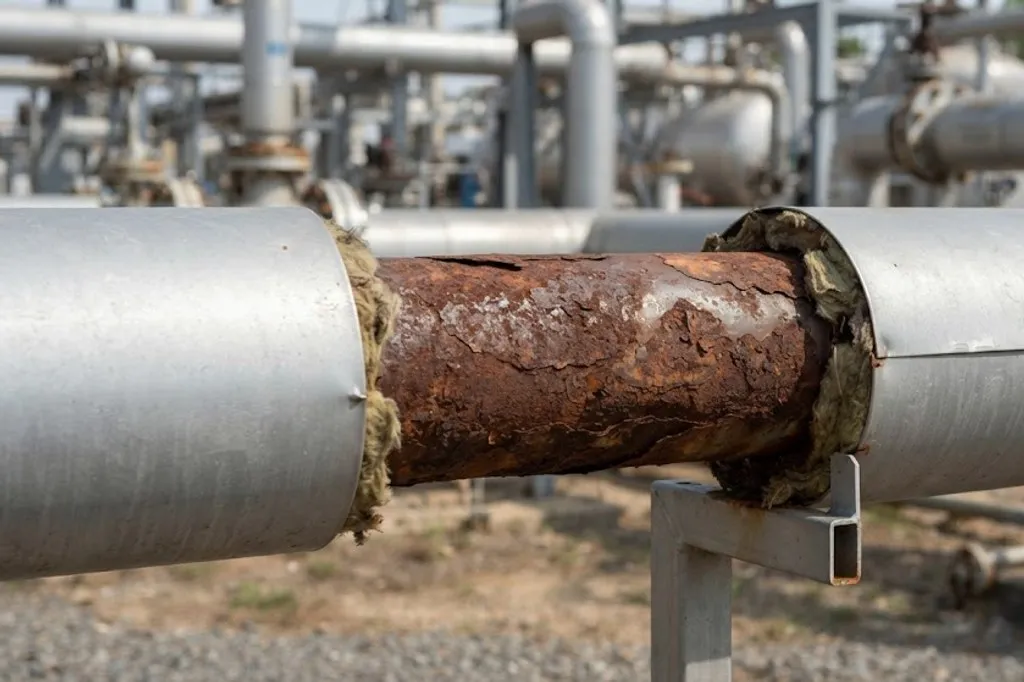
| Corrosion under insulation | Carbon steel, and stainless at risk of chloride SCC | Water under insulation, roughly –12 to 175 °C | Coating under the insulation; keep the water out; weatherproofing | Intermittent and cyclic service is worse than continuously hot |
No rows match that filter.
Each row is a property of the MATERIAL meeting a property of the SERVICE. Neither alone causes damage, which is why the same steel is entirely sound in one line and failing in the next — and why substituting a material without knowing the service is one of the more dangerous things anyone can do on a plant.
Sensitisation: losing corrosion resistance without losing anything else
Austenitic stainless steel resists corrosion because chromium in solution forms a passive film. Anything that takes chromium out of solution takes the resistance with it.
Hold the steel between roughly 450 and 850 °C and chromium combines with carbon to form carbides, which precipitate at the grain boundaries. The metal immediately either side of each boundary is left depleted of chromium.
Three ways out, all decided at procurement:
- L grades — 304L, 316L — with carbon low enough that there is little to form carbides with.
- Stabilised grades — 321 and 347, with titanium or niobium that grab the carbon preferentially and leave the chromium alone.
- Solution annealing after welding, which redissolves the carbides. Rarely practical on installed pipework.
Chloride stress corrosion cracking
Austenitic stainless has a second weakness and it catches people who chose it for its corrosion resistance.
Chlorides, tensile stress and temperature — roughly above 60 °C — together produce branching cracks that run right through a wall showing full thickness.
The stress does not have to be applied. Residual stress from welding is quite enough, which is why cracking so often appears near welds in a line nobody is loading.
Sour service: hardness is the controlled variable
Wet hydrogen sulphide attacks steel in two quite different ways, and confusing them leads to the wrong specification.
Sulphide stress cracking (SSC) happens in hard material. Atomic hydrogen from the corrosion reaction enters the steel and, where the microstructure is hard and highly stressed, it causes cracking.
Hydrogen induced cracking (HIC) is a different problem with a different cure. Hydrogen collects at elongated inclusions left by rolling, builds pressure, and forms internal blisters that link up into stepwise cracks.
Hardness is not the driver here — steel cleanliness is. Which is why sour service plate is specified as HIC-tested with controlled sulphur and inclusion shape, and why a low-hardness steel can still fail by HIC.
High temperature hydrogen attack
At temperature and hydrogen partial pressure, hydrogen diffuses into steel and reacts with the carbides that give it strength, forming methane in the grain boundaries. The metal fissures from within and decarburises.
Galvanic corrosion, and which condition to break
Two dissimilar metals in electrical contact with an electrolyte bridging them form a cell. The less noble one corrodes faster than it would alone; the more noble one is protected.
Three conditions, all required:
- Two dissimilar metals — different enough in the galvanic series to drive a current.
- Electrical contact between them.
- A continuous electrolyte — rainwater, condensation, seawater, damp insulation.
Area ratio decides the severity. A small anode with a large cathode is the dangerous arrangement — carbon steel bolts in a stainless flange corrode furiously, because the entire stainless area drives current into a tiny steel area. The same metals the other way round, with stainless bolts in a carbon steel flange, is almost harmless.
Zinc and stainless
Carbon equivalent, and why a certificate is worth reading
Carbon equivalent combines carbon with the other elements that promote hardening — manganese, chromium, molybdenum, nickel, copper — into a single number.
A high carbon equivalent means a heat-affected zone that hardens readily on cooling, and hard heat-affected zones are vulnerable to hydrogen cracking: hydrogen from damp consumables or a damp surface, plus a hard microstructure, plus residual stress.
Embrittlement without corrosion
Some mechanisms take toughness away without removing any metal at all. Nothing thins, nothing cracks in service — until something is loaded or cooled and then fails in a brittle manner.
- Temper embrittlement — Cr-Mo steels held for long periods around 350–575 °C, with tramp elements such as phosphorus and tin migrating to grain boundaries. Controlled at procurement by chemistry limits, and it is why some heavy wall reactors have minimum pressurisation temperatures on start-up.
- 885 °F embrittlement — ferritic and duplex stainless around 400–500 °C.
- Sigma phase — a brittle phase forming in high-chromium alloys around 600–900 °C.
All three are selection problems. None is detectable by inspecting the surface.
Erosion-corrosion and injection points
Where velocity is high or flow is turbulent, the protective film that limits corrosion is continuously swept away and the fresh metal underneath corrodes again.
Injection points are the classic location — a chemical introduced into a flowing stream produces turbulence, a local concentration and often a temperature difference all at once, a short distance downstream of the quill.
That is a localised attack, so a fixed grid of thickness readings can fall either side of it and report the line as sound. Injection points get their own inspection scope for this reason.
Corrosion under insulation
CUI needs water at the metal surface and a temperature where corrosion proceeds — broadly −12 to 175 °C for carbon steel.
Knowing what the material actually is
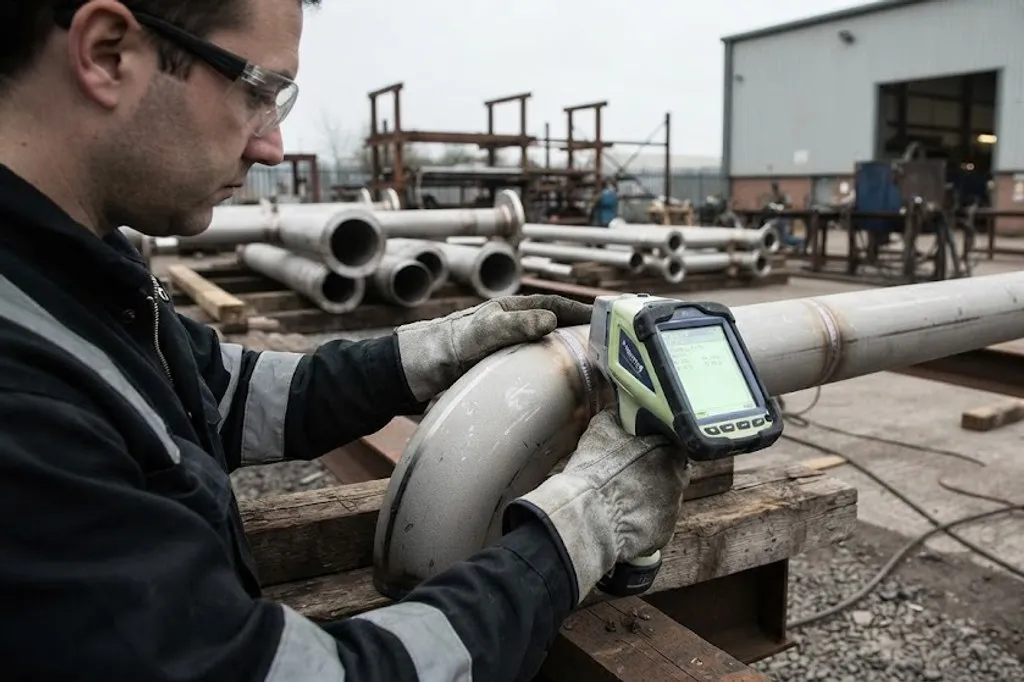
All of this reasoning depends on knowing what the component actually is — and the alloy fitting replaced with carbon steel during a shutdown is invisible to every other inspection method.
Positive material identification is the answer, and it is why PMI is specified on alloy systems at fabrication and after any repair.
What to take away
- Sensitisation depletes chromium at grain boundaries between 450–850 °C. Damage appears beside the weld. Use L or stabilised grades.
- Chloride SCC needs chlorides, tensile stress and temperature — and residual welding stress is enough. Insulation is a common chloride source.
- Sour service controls hardness (SSC), and B7M is low-hardness B7. HIC is about steel cleanliness, not hardness.
- HTHA leaves the wall thickness unchanged. Select against the Nelson curves.
- Galvanic corrosion needs three conditions — break the easiest, usually the electrolyte. A small anode with a large cathode is the dangerous ratio.
- Molten zinc embrittles austenitic stainless. Keep galvanised material away from it.
- Carbon equivalent predicts a hard heat-affected zone, so it sets preheat and hydrogen control. Read the certificate.
- Intermittent service suffers worse CUI than continuously hot service.
- PMI is the only method that tells you what the metal is.
Check your understanding
7 questions. Nothing is recorded — this is just for you.