HSE
Working at height and lifting operations
Why preventing a fall beats arresting one, what suspension trauma does to somebody hanging in a harness, why a scaffold tag matters more than how the scaffold looks, how sling angle multiplies the load in each leg, and why nobody stands under a suspended load however short the lift.
Falls and dropped objects account for a large share of construction fatalities, and both have the same structure as a problem: the energy involved is decided by gravity and the height, and neither is negotiable.
Prevent first, arrest last
The hierarchy applies here as everywhere, and it maps onto three quite different approaches.
- Eliminate — do the work at ground level. Prefabricate, assemble low, lift complete. By far the strongest measure and the most often overlooked, because it has to be decided early.
- Collective prevention — guardrails, a proper working platform, covers over openings. These protect everybody in the area without anybody having to do anything.
- Personal protection — restraint, then arrest.
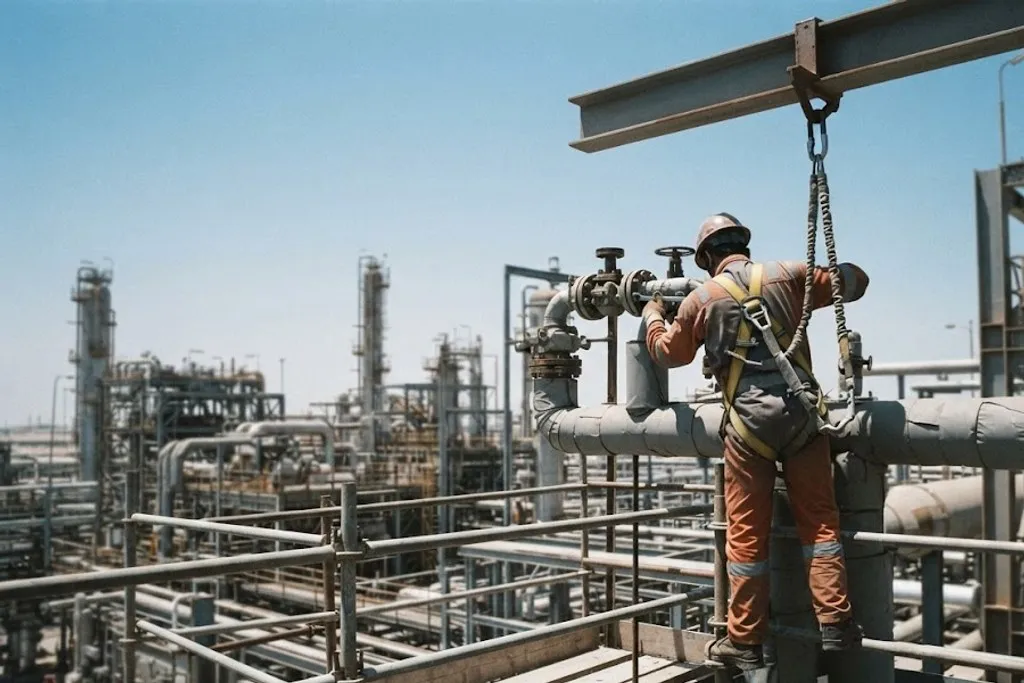
If arrest is the answer, the details matter
Anchor above the user where possible. Everything above the anchor is free fall. An anchor at foot level roughly doubles the distance fallen before anything happens, raising the arrest forces and adding a pendulum swing that can throw somebody into structure.
Shock absorbing lanyard. A rigid stop at the end of a plain lanyard can injure the spine. The absorber tears progressively to spread the deceleration.
Calculate the clearance. Lanyard length, absorber extension, the person’s height and a safety margin all add up. A short drop onto steel is not an arrest — it is an impact with extra steps.
Scaffolding
A scaffold is a temporary structure, engineered, and it is only as good as its last alteration.
The tag is the release. A green tag means a competent person has inspected it and released it for use. No tag, or an incomplete tag, means it has not been released — however finished it looks, and a scaffold that looks finished is precisely the one somebody will use by mistake.
Inspection is at least every seven days and after anything that could affect stability: high wind, an impact from plant, or an alteration.
Toe boards stop tools and material being kicked off the edge. Boards secured against uplift stop the wind creating a fall opening. Mobile towers are never moved with people or materials on them, because the raised weight makes them liable to overturn — a rule broken constantly to save climbing down.
Ladders are access, not a workplace. Three points of contact, footed and secured, the right angle, and extending above the landing. Work from one leaves poor balance and no free hands.
Dropped objects
Anything falling from height carries enough energy to kill, and the person struck is never the person who dropped it.
The controls are unglamorous and effective: toe boards, tool tethering, barriered exclusion zones below overhead work, and secondary retention on anything fixed at height — a light fitting that falls from a pipe rack is a dropped object, not a lighting problem.
Lifting operations
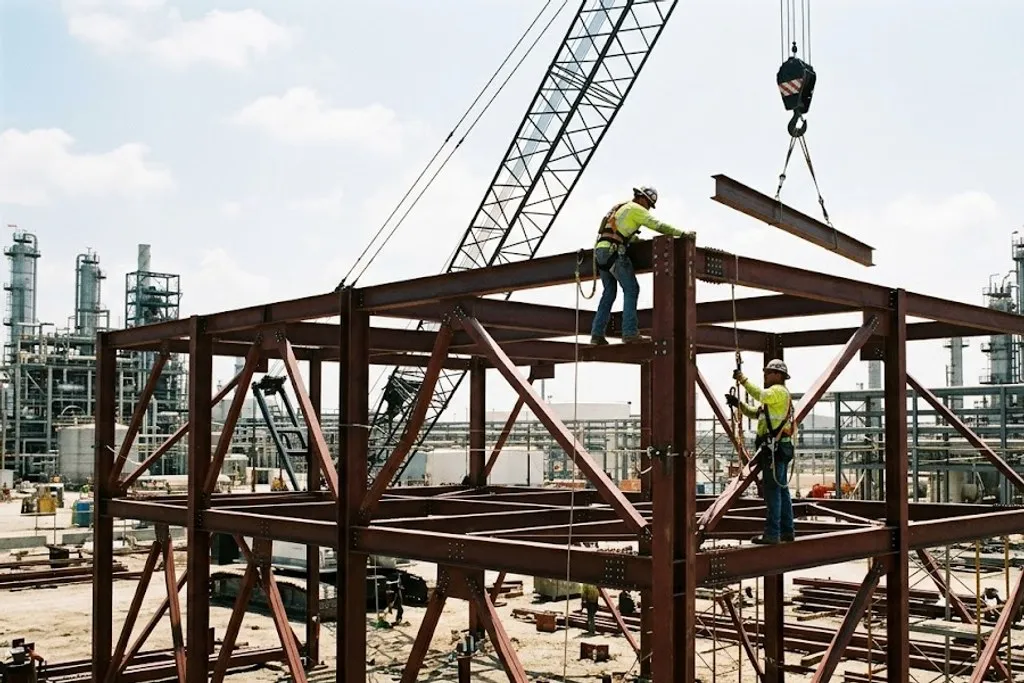
Every lift needs a lift plan proportionate to it, and even a routine lift needs somebody to have checked the weight against the radius before the hook goes on.
Confirm the weight, do not estimate it. A crane at long radius has a small fraction of its headline capacity, so an underestimate of a few tonnes is the difference between a lift and an overturn.
Check the ground. Outriggers concentrate the whole machine and its load onto four small areas. Backfilled ground over a trench will not take it, and mats spread the load for exactly that reason.
One signaller. The banksman directs the operator when the load or its path is out of view, and there is only ever one of them, using an agreed signal set. Two people signalling at once is how a load ends up moving the wrong way.
Slings and the angle that catches people out
Slings are also inspected before every use, not just periodically certified — a cut, a burn or a crushed section from a sharp edge on the last lift is exactly what a pre-use check finds. Shackles need the correct pin, not a substituted bolt, which fails at a fraction of the marked load.
The rule about standing underneath
Nobody stands beneath a suspended load. Not briefly, not to steady it, not because the lift is only a metre.
A trial lift of a few centimetres, checking the load hangs level and the slings are seated, is the point at which a bad lift can still be stopped cheaply. A load not slung through its centre of gravity will tilt as it leaves the ground, and that is far better discovered at ankle height.
What to take away
- Eliminate the work at height first, then guardrails, then restraint, then arrest.
- Restraint prevents the fall. Arrest deals with one that happened — and creates a rescue problem.
- Anchor overhead, use a shock absorbing lanyard, and calculate the clearance.
- Suspension trauma makes a rescue plan part of the preparation, not a reaction.
- The scaffold tag is the release. Only a scaffolder alters a scaffold; removed ties cause collapses.
- Confirm load weights, check the ground under outriggers, and use one signaller.
- A wider sling angle multiplies leg tension — sometimes above the load weight.
- Nobody stands under a suspended load. Use tag lines.
Check your understanding
6 questions. Nothing is recorded — this is just for you.