
Mechanical
Diameter-inch and progress measurement — the unit piping is paid in
What a diameter-inch is and how it is counted, why it under-represents small bore, the difference between claimed and earned progress, the measurement rule that has to be agreed before work starts, and why the last ten per cent of a piping package takes months.
Standards referencedISO 21508
Every piping subcontract on earth is measured and paid in diameter-inch, and most people doing the work have never had it explained. It is the unit the money moves in, the unit progress is reported in, and the unit a dispute will eventually be settled in.
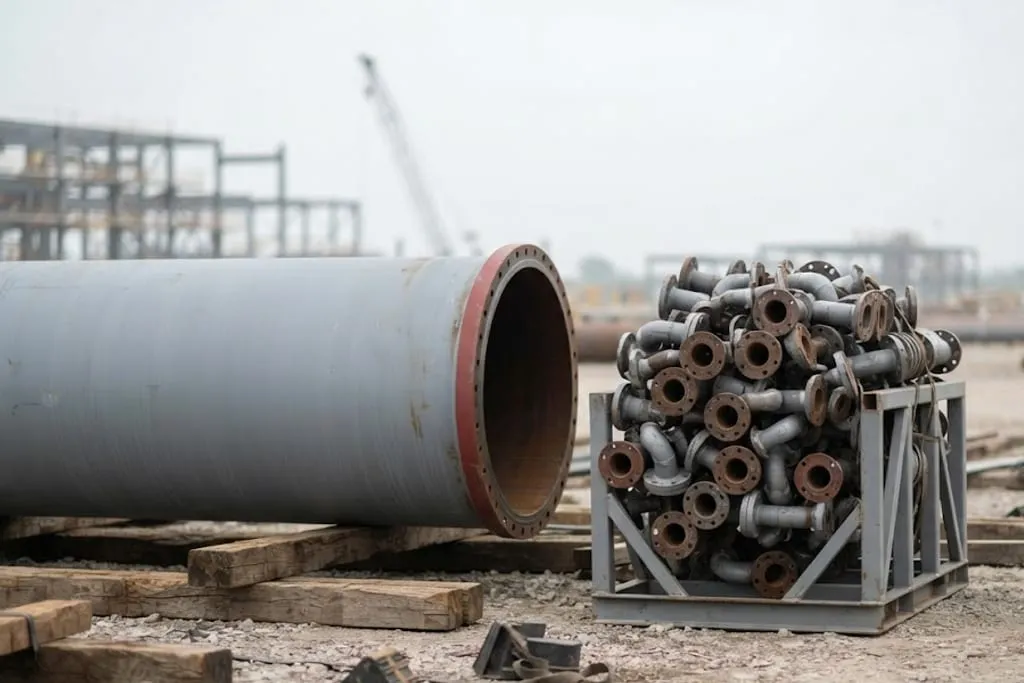
It is also a slightly odd unit, and understanding exactly how it misrepresents the work is as useful as understanding what it measures.
What it is
A diameter-inch is the nominal pipe size in inches, counted once per weld.
One butt weld on a 6-inch line is 6 diameter-inch. Twenty welds on that line are 120. A 24-inch weld is 24, four times the 6-inch weld, which is roughly the ratio of effort between them.
That is the whole definition. It is deliberately crude, and the crudeness is the point — it has to be countable from a drawing by two parties who disagree about nearly everything else, without argument about which one took longer.
Variants exist. Some contracts weight for wall thickness, some for material, some count socket welds at a reduced rate. Which variant applies is a contract question and is worth establishing on day one, because it changes the number materially and nobody raises it until the first valuation.
Where it misleads
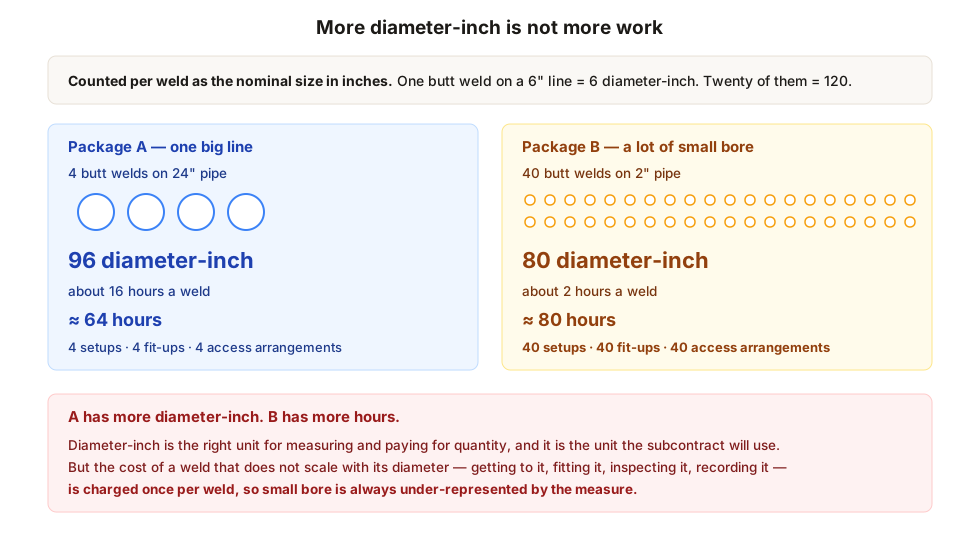
The reason is straightforward once seen. A weld costs more than welding. It costs getting to it, scaffolding to it, fitting it up, purging it, inspecting it, recording it and chasing its paperwork — and none of that scales with diameter. A 2-inch weld needs an access platform just as a 24-inch weld does.
So a package full of small bore earns less and costs more. A supervisor who does not know this will take on small-bore packages cheerfully and wonder why the crew is busy and the progress figure will not move.
Claimed against earned
The second half of the subject, and the one that causes the arguments.
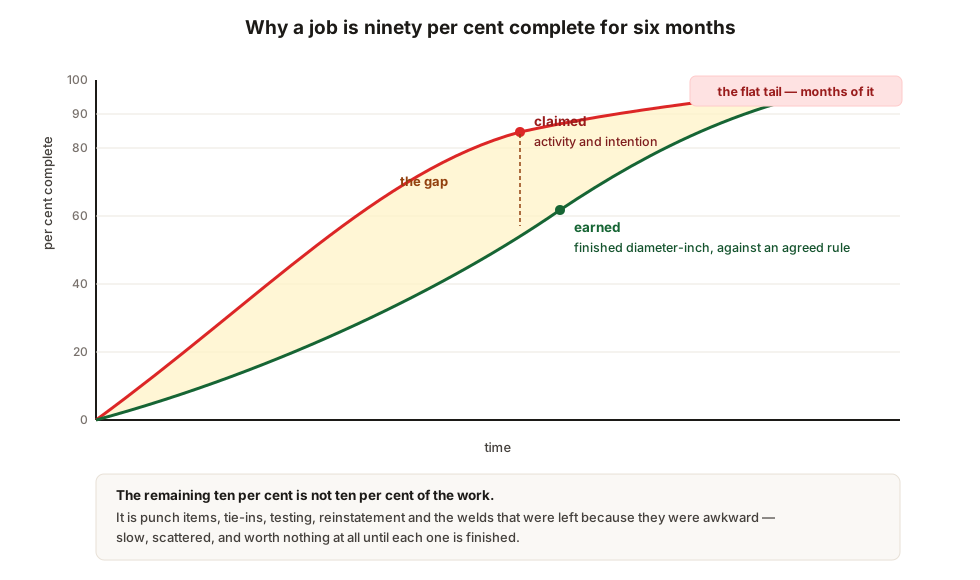
Claimed progress is what the work feels like. It rises steadily, reaches ninety per cent comfortably early, and then stops.
Earned progress counts only what is finished, against a rule agreed beforehand. It rises more slowly at the start, steepens through the middle, and converges with the claim only at the end.
The rule has to come first
This is the single most valuable thing a supervisor can insist on, and it is free at the time.
Agree the measurement rule before the work starts. What earns, at what point, and against what total. For a weld, the usual options are: on fit-up, on root pass, on completed weld, on accepted NDE, or split across those in agreed percentages.
Any of those is defensible. What is not defensible is deciding afterwards, because by then both parties know the numbers and will each choose the definition that suits them. A rule agreed in advance is a rule; the same rule proposed during a dispute is a negotiating position.
Why ninety per cent lasts six months
Because the remaining ten per cent is not ten per cent of the work.
The easy repetitive high-earning welds are done first, precisely because they are easy. What is left at ninety per cent is the awkward ones — the spool that needs another trade to move first, the tie-in that needs a window, the line that cannot be tested until its neighbour is reinstated, and the punch items scattered over four units.
They are slow, they are geographically spread, and under most measurement rules they earn nothing at all until each one is individually complete. The curve goes flat not because the crew slowed down but because the work changed character.
Comparing two crews
A practical warning, because it comes up constantly. Crew A reports 70 per cent, crew B reports 45. A is not necessarily ahead.
Percentages are ratios, and two ratios are only comparable if the top and the bottom mean the same thing in both. Before comparing, establish:
| Check | Why it matters |
|---|---|
| Same unit? | One counting welds and one counting diameter-inch are not comparable |
| Same total? | If B’s denominator includes testing and A’s does not, B is penalised |
| Same earning point? | Fit-up versus accepted NDE can differ by weeks of apparent progress |
| Same scope boundary? | Supports, small bore and hydrotest are the usual inclusions in dispute |
Nine times out of ten the two figures turn out to have been measured differently, and the comparison dissolves. That is the useful outcome — not knowing who is ahead, but discovering that nobody actually knew.
Check your understanding
6 questions. Nothing is recorded — this is just for you.